
Air-Check: Why Having Someone Coach Your On-Camera Performance Matters
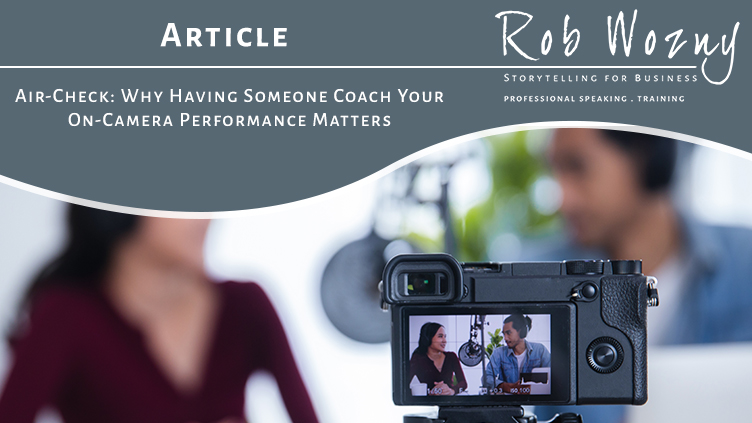
Watching yourself on camera isn’t exactly fun. Now imagine watching yourself with your boss or supervisor right beside you. During my broadcast journalism years as a news anchor, this was a regular part of the job. We called them air checks. They are routinely scheduled sessions where a trusted editor or news director would sit down with you and review your on-air performance. That includes all the stumbles, mispronounced word, awkward transitions, and sometime questionable choice of wardrobe, and more.
As challenging and uncomfortable as those sessions could be, they were also extremely invaluable.
Having an experienced, objective voice review your on-camera performance doesn’t just point out what needs improvement, it helps you get better, especially if you want to play a leading role in your storytelling content or perhaps support your leader in doing so.
Even if you don’t have someone who has a tremendous amount of experience on-camera, finding someone in your network who you can trust to share honestly what they’re experience when watching and hearing you is also beneficial.
When constructive, and timely, the feedback can fine-tune your storytelling, strengthen your presence, and help you become more comfortable knowing people are watching you. It’s also optimal to schedule airchecks near the delivery of your storytelling on camera.
And it’s not just about how you look on camera.
Effective feedback focuses on what you’re saying and how you’re saying it, including your messaging and, your powerful body language. What you’re wearing, whether it’s a complement or distraction, also needs a careful critique as wardrobe, accessories, and make-up are such personal choices, making it harder to be objective.
One of the biggest benefits of regular on-camera coaching is desensitization. The more you review your performance with a professional, the less power your inner critic holds, and we all have them, no matter how much on-camera experience you have. With desensitizing airchecks, you’ll tend to stop fixating on the sound of your voice or the way you look and start focusing on measurable improvement.
I call it a substantial shift from subjective self-judgment to objective self-development, and that is the where real progress happens.
Whether you’re a leader, spokesperson, or subject matter expert, having someone listen, coach, and provide honest feedback is one of the most effective ways to build confidence and credibility on camera. It’s not any easy process (at first), but it’s worth it in the long run.


